
What Is BPMN 2.0 and why it matters
BPMN 2.0 (Business Process Model and Notation) is the global standard for modelling business processes. Developed by the Object Management Group (OMG), it provides a visual language that bridges the gap between business analysts and technical developers.
Whether you’re optimizing a customer onboarding flow or automating invoice approvals, BPMN 2.0 makes complex processes understandable and executable.
The Value of BPMN 2.0 for businesses
1. Clarity across teams: Speak the same language
One of the biggest difficulties in process improvement is the disconnect between business and IT. Business stakeholders describe what needs to happen, and developers interpret it into code (often with gaps in between).
BPMN 2.0 solves this with a shared visual language. Its symbols and structure are intuitive enough for business analysts and precise enough for developers. For example:
- A user task clearly indicates human involvement.
- A service task signals system automation.
- A message event shows when systems or teams communicate.
By using the same diagrams to design, discuss, and deliver processes, cross-functional teams can collaborate without translation errors. This dramatically reduces miscommunication, rework, and project delays.
End result?
- Faster development cycles
- Fewer bugs and handoff issues
- More confidence in what’s being built
2. Supports automation: From diagram to deployed process
BPMN 2.0 isn’t just for drawing—it’s built for execution.
Many BPMN modelling tools now integrate with process engines that interpret and run BPMN diagrams as live workflows. Engines like:
- Camunda
- Flowable
- Zeebe
- Bonita BPM
can take your BPMN 2.0 diagram and turn it into a fully functional process automation. You define the logic visually:
- Which tasks are manual?
- Which are automated?
- What happens in parallel?
- What triggers what?
The engine handles the orchestration.
This turns BPMN 2.0 into a true bridge between business intent and technical implementation, not just a documentation tool, but a driver of real digital transformation.
Key Elements of BPMN 2.0 (And how to use them right)
Events, Activities, Gateways
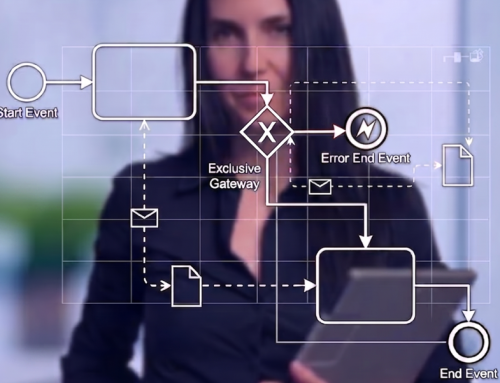
- Events: Represent something that happens (start, intermediate, end).
- Activities: Tasks performed within the process.
- Gateways: Decision points that control the flow (e.g., XOR, AND).
Pools and Lanes
- Pools represent participants.
- Lanes break down roles or departments within those participants.
This structure is essential for modelling collaborative processes between systems or teams.
Artifacts
While not executable, artifacts (like annotations or data objects) add critical context that helps stakeholders understand the “why” behind each step.
Common BPMN 2.0 mistakes to avoid
Overcomplicating the diagram
Stick to simplicity over completeness. A clean model is better than an exhaustive one.
Misusing Gateways
Understand the difference between exclusive (XOR), inclusive (OR), and parallel (AND) gateways. Misuse can lead to logic errors during execution.
Ignoring execution semantics
If your BPMN diagram is intended for automation, make sure every element maps cleanly to system logic. Avoid elements that only serve visual purposes.
Best practices for BPMN 2.0 modelling
- Start with the high-level flow. Don’t model everything in the first pass.
- Validate with stakeholders early. Get alignment before diving into details.
- Use consistent naming. Task names should be action-oriented and precise.
- Leverage sub-processes. They help manage complexity and promote reuse.
Tools that support BPMN 2.0
Several tools offer robust support for BPMN 2.0, both for modelling and execution:
- Camunda Modeler (https://camunda.com/download/modeler/)
- Signavio Process Manager (https://www.signavio.com/)
- Bizagi Modeler (https://www.bizagi.com/en/platform/modeler)
- Flowable (https://www.flowable.com/)
- BonitaSoft (https://www.bonitasoft.com/)
- Adonis (BPM For Your Digital Twin | ADONIS:Community Edition)
- Engage Process (https://www.engageprocess.com/en/)
These tools let you design, simulate, and deploy BPMN-based workflows.
Final thoughts: BPMN 2.0 is more than a diagram
BPMN 2.0 is not just a drawing standard, it’s a bridge between human understanding and machine execution. It enables transparency, collaboration, and efficiency across the business lifecycle.